How a Septic System Works (Plain-English Guide)
A septic system treats household wastewater on your own property in two stages. Wastewater flows into a buried tank where solids settle to the bottom as sludge and grease floats on top as scum. The liquid in the middle drains out to a buried drainfield, where soil filters and cleans it before it returns to the groundwater.
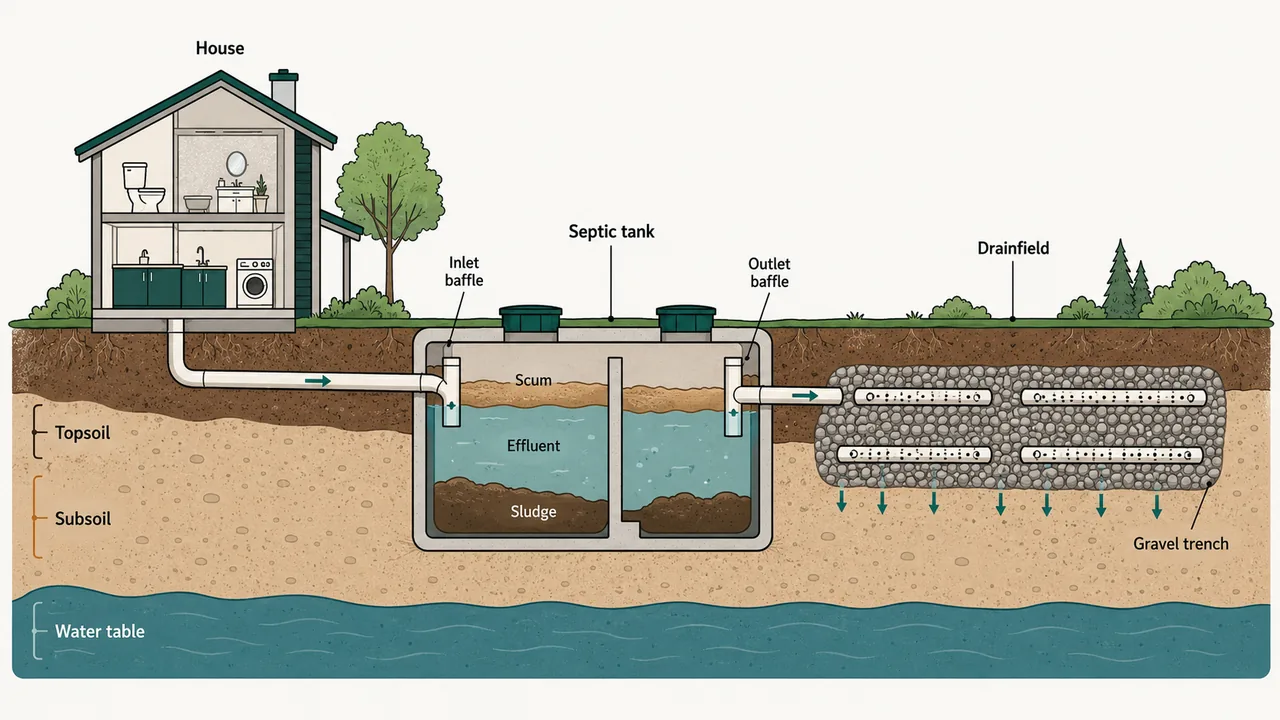
- A septic system is your own private wastewater treatment plant: a watertight tank plus a buried drainfield, all on your property.
- The tank separates waste into three layers (scum, liquid, sludge) and lets bacteria break down solids. The liquid flows out to the drainfield.
- The drainfield is where the real cleaning happens, soil microbes and filtration treat the wastewater before it rejoins the groundwater.
- More than 1 in 5 US households, over 60 million people, rely on a septic system.
- The system only works if solids stay in the tank. That's why you pump every 3 to 5 years, before sludge reaches the drainfield and ruins it.
What a septic system actually is
If your home isn't connected to a municipal sewer line, you have a septic system, and you are running a small wastewater treatment plant in your own yard. Instead of piping waste miles away to a city plant, a septic system treats everything that goes down your drains right where you live, using gravity, bacteria, and soil.
This is more common than people think. According to the EPA, more than one in five US households, over 60 million Americans, depend on a septic system. It's the norm in rural and many suburban areas where running sewer lines would be impractical or expensive.
Almost every conventional system comes down to two buried parts that do all the work: the septic tank and the drainfield (also called a leach field or absorption field). Understand those two and you understand the whole system.
The two main parts
Wastewater leaves your house through a single main drain line and moves through the system by gravity in most homes. Here's what each part does:
- The septic tank: A watertight, buried container, usually concrete, plastic, or fiberglass, holding roughly 1,000 to 2,000 gallons. A typical three-bedroom home runs a 1,000 to 1,250-gallon tank. Its job is to separate solids from liquid and hold the waste long enough for bacteria to start breaking it down.
- The drainfield: A network of perforated pipes laid in gravel-filled trenches buried in your yard. The liquid from the tank trickles out through these pipes and into the soil, which does the final cleaning. The drainfield is the part most people forget about, and it's the most expensive part to replace.
How the tank separates your waste
Inside the tank, waste naturally sorts itself into three layers, and this separation is the whole point of the tank.
Heavy solids sink to the bottom and form a layer called sludge. Fats, oils, and grease float to the top and form a layer called scum. In between sits the relatively clear liquid, called effluent. Bacteria living in the tank (the same ones already in your waste) digest some of the solids over time, which is why it's a 'septic' tank, septic meaning bacterial breakdown without oxygen.
An outlet on the tank is positioned in the middle, so only the clear effluent in the center layer leaves the tank. A properly working tank holds waste long enough, usually a day or more, for solids to settle out before that liquid moves on. If the tank is too small or too full, waste doesn't get enough settling time and solids escape to the drainfield, which is where expensive trouble starts.
How the drainfield finishes the job
The effluent leaving the tank is not clean yet, it still carries bacteria, viruses, and nutrients. The drainfield is where it actually gets treated.
From the tank, effluent flows (sometimes through a distribution box that splits it evenly) into the perforated pipes buried in gravel trenches. The liquid seeps out of the pipes, through the gravel, and into the surrounding soil. As it percolates down, the soil filters out particles and a thriving community of soil microbes consumes the harmful bacteria and nutrients. By the time the water reaches the groundwater table below, it's been naturally cleaned.
This is why a healthy drainfield is everything. It needs to stay unsaturated and unclogged to breathe and treat water. A well-maintained drainfield lasts 20 to 30 years; one that gets flooded with solids or compacted by traffic can fail in a fraction of that. For a deeper look at what kills a drainfield and how to protect yours, see our guide to drainfield failure.
Why pumping is the one job you can't skip
Here's the catch that ties the whole system together: bacteria break down some of the sludge, but not all of it. Solids keep accumulating at the bottom of the tank year after year. Nothing removes them except a pump truck.
If you never pump, the sludge layer builds until there's no room left for waste to settle. Solids then flow out to the drainfield, clog the soil and pipes, and the drainfield fails. A drainfield replacement can run many thousands of dollars; a routine pump-out is a small fraction of that. (See septic pumping cost for current pricing in your area.)
The EPA recommends inspecting a typical household system at least every three years and pumping the tank every three to five years. The exact interval depends on tank size, household size, and water use, a big family with a small tank and a garbage disposal may need pumping every year or two. Our guide on how often to pump a septic tank walks through the math, and the signs your tank is full guide covers the warning signs to watch for between pumpings.
How long a septic system lasts
A well-maintained septic system commonly lasts 15 to 40 years, and the right care can push it longer. The tank itself often outlives the drainfield, concrete tanks can last 40 to 50 years, while the drainfield typically gives you 20 to 30.
The difference between a system that lasts 15 years and one that lasts 40 comes down to maintenance habits: pumping on schedule, not flushing things that don't belong, keeping water use reasonable, and keeping vehicles off the drainfield. Our septic do's and don'ts checklist covers the daily habits that matter most.
If you're buying or selling a home with a septic system, get it inspected first, a failing system is a major hidden cost. See our guide to septic inspections when buying or selling a home.
Frequently asked questions
Where does the waste go in a septic system?
Solid waste settles and stays in the septic tank until a pump truck removes it. The liquid portion flows out to the drainfield, where soil and microbes clean it before it rejoins the groundwater. Nothing leaves your property except treated water that filters into the soil.
Do septic tanks need electricity to work?
Most conventional septic systems work entirely by gravity and need no electricity. Some setups, like systems on a slope that require a pump to move effluent uphill, or aerobic systems that inject air, do use electricity. Aerobic vs. conventional systems covers the difference.
How do I know if I have a septic system or city sewer?
If you pay a monthly sewer bill to your city or utility, you're on sewer. If you don't, and especially if you live rurally, you likely have septic. Look for a tank lid or inspection port in your yard, or check your property records. See our septic vs. sewer comparison for the trade-offs.
What's the difference between a septic tank and a drainfield?
The tank is the watertight container that separates and holds solids. The drainfield is the network of buried pipes and soil that does the final treatment of the liquid. They work together: the tank protects the drainfield by keeping solids out of it.
How often does a septic system need to be pumped?
The EPA recommends pumping the tank every three to five years and inspecting it at least every three years. Larger households, smaller tanks, and garbage disposals shorten the interval. See how often to pump a septic tank for a tailored estimate.
What happens if I never pump my septic tank?
Sludge builds up until solids escape into the drainfield, clogging the soil and causing the drainfield to fail. That leads to sewage backups, yard flooding, and a repair bill many times the cost of routine pumping. Read what happens if you never pump for the full picture.
Keep reading
How Often Should You Pump a Septic Tank?
Most households should pump their septic tank every 3 to 5 years, and the EPA recommends a professional inspection at least every …
7 Signs Your Septic Tank Is Full or Failing
The clearest signs a septic tank is full or failing are slow drains throughout the house, gurgling pipes, sewage odors indoors or …
What Happens If You Never Pump Your Septic Tank?
If you never pump your septic tank, sludge keeps building until solids overflow into the drainfield, clogging the soil with a "bio…