How Often Should You Pump a Septic Tank?
Most households should pump their septic tank every 3 to 5 years, and the EPA recommends a professional inspection at least every 3 years. The exact interval depends on tank size, how many people live in the home, water use, and whether you run a garbage disposal. Smaller tanks and bigger households need pumping sooner.
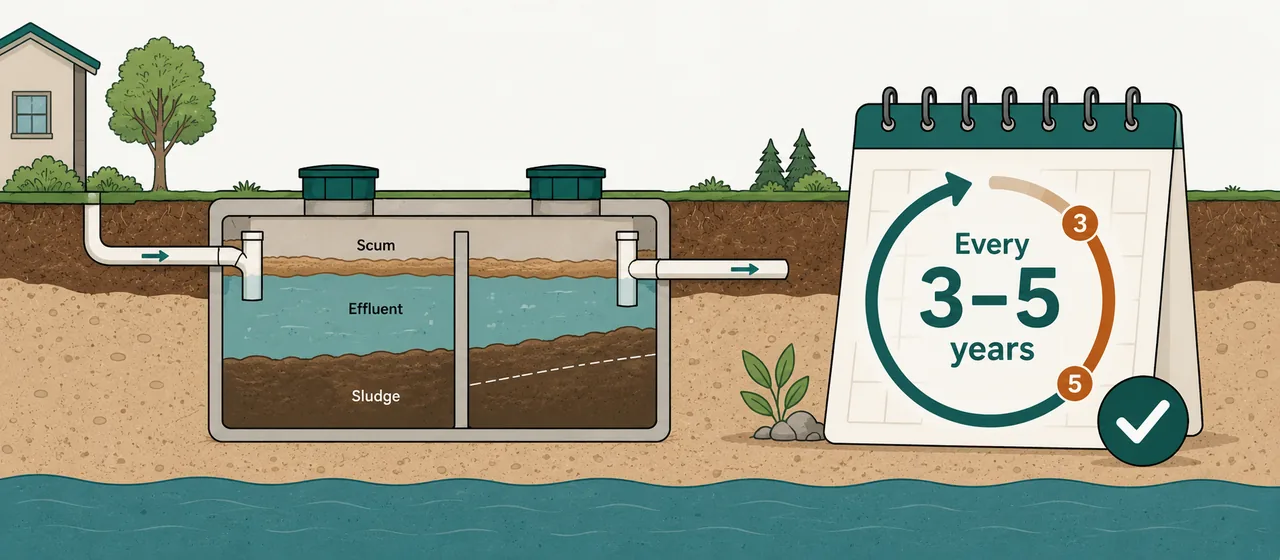
- Pump every 3–5 years is the rule of thumb; the EPA says inspect at least every 3 years.
- Four people on a 1,000-gallon tank typically need pumping every 2–3 years; a couple on the same tank can stretch to 4–5.
- A garbage disposal speeds up sludge buildup by roughly 30–50%, shaving a year or two off your schedule.
- The real trigger: pump when sludge plus scum fill about a third of the tank, not just when the calendar says so.
- Skipping pumping risks a backed-up house and a clogged drainfield, which costs far more than routine pumping.
The short answer
For a typical home, pump the septic tank every 3 to 5 years. That's the range most septic pros and health departments land on, and it lines up with the U.S. EPA's guidance to have the average household system inspected at least every 3 years by a professional.
But "every 3 to 5 years" is a starting point, not a law. A retired couple in a big tank might safely go 6 or 7 years. A family of six on a small tank might need pumping every year and a half. The right number for your house comes down to four things: tank size, how many people live there, how much water you use, and what goes down the drain.
If you only remember one thing: it's cheaper and far less disgusting to pump on a schedule than to wait until sewage backs up into your bathtub. See what that failure looks like in our guide to the signs your septic tank is full.
What actually drives the schedule
A septic tank works by letting solids settle to the bottom as sludge while grease and lighter material float on top as scum. The middle layer of clarified liquid flows out to the drainfield. Pumping removes the sludge and scum before they build up enough to escape the tank and clog the drainfield. How fast those layers accumulate is what sets your timing.
Four factors move the needle:
- Tank size: A 1,000-gallon tank is the most common residential size and fills fastest. A 1,250- or 1,500-gallon tank buys you more time between pumpings.
- Household size: More people means more wastewater and more solids. Each additional person meaningfully shortens the interval.
- Water use: High-volume habits, long showers, frequent laundry, a water softener that discharges to the tank, push more flow through and reduce settling time for solids.
- Garbage disposal: Food scraps add solids the bacteria can't fully break down. Regular disposal use increases sludge buildup by roughly 30–50%.
Pumping frequency by household and tank size
This table is the Cooperative Extension pumping-frequency table that originated with Mancl (1984) and has been republished for decades by Penn State, Ohio State, and Virginia Cooperative Extension — the data most state health departments and county programs rely on. It assumes average water use and no garbage disposal. If you run a disposal or use a lot of water, shift one to two years sooner.
Read it as a planning estimate, not a guarantee. Your soil, your habits, and your tank's actual condition always win over a chart.
- 1 person, 1,000-gal tank: roughly every 10+ years
- 2 people, 1,000-gal tank: roughly every 5 years
- 4 people, 1,000-gal tank: roughly every 2.5–3 years
- 6 people, 1,000-gal tank: roughly every 1.5 years
- 4 people, 1,500-gal tank: roughly every 4–5 years
- 6 people, 1,500-gal tank: roughly every 2.5–3 years
| Tank size | 1 person | 2 people | 3 people | 4 people | 5 people | 6 people | 7 people | 8 people |
|---|---|---|---|---|---|---|---|---|
| 500 gal * | 5.8 | 2.6 | 1.5 | 1 | 0.7 | 0.4 | 0.3 | 0.2 |
| 750 gal * | 9.1 | 4.2 | 2.6 | 1.8 | 1.3 | 1 | 0.7 | 0.6 |
| 900 gal | 11 | 5.2 | 3.3 | 2.3 | 1.7 | 1.3 | 1 | 0.8 |
| 1,000 gal | 12.4 | 5.9 | 3.7 | 2.6 | 2 | 1.5 | 1.2 | 1 |
| 1,250 gal | 15.6 | 7.5 | 4.8 | 3.4 | 2.6 | 2 | 1.7 | 1.4 |
| 1,500 gal | 18.9 | 9.1 | 5.9 | 4.2 | 3.3 | 2.6 | 2.1 | 1.8 |
| 1,750 gal | 22.1 | 10.7 | 6.9 | 5 | 3.9 | 3.1 | 2.6 | 2.2 |
| 2,000 gal | 25.4 | 12.4 | 8 | 5.9 | 4.5 | 3.7 | 3.1 | 2.6 |
| 2,250 gal | 28.6 | 14 | 9.1 | 6.7 | 5.2 | 4.2 | 3.5 | 3 |
| 2,500 gal | 30.9 | 15.6 | 10.2 | 7.5 | 5.9 | 4.8 | 4 | 3.5 |
The better trigger: measure the sludge
The calendar is a backup plan. The real signal for when to pump is how full the tank actually is. The widely used industry rule, also cited by the EPA: pump when the bottom of the scum layer sits within about 6 inches of the outlet tee, or when the top of the sludge layer is within about 12 inches of it. A simpler version many extension guides use: pump when sludge and scum together fill roughly a third of the tank.
You don't have to measure this yourself. A septic pro checks the layers during a routine inspection using a sludge judge or a clear measuring stick, which is exactly why the EPA recommends an inspection every 3 years even if you're not pumping every time. That inspection is also where problems get caught early. If you've never had your system mapped, our plain-English guide on how a septic system works explains the parts.
When to pump more often
Some situations call for a tighter schedule than the chart suggests. Bump up your frequency, or at least your inspection frequency, if any of these apply:
- You run a garbage disposal regularly: plan to pump 1–2 years sooner.
- You have an aerobic or other mechanical system: these need annual inspection of the pump, floats, and alarm. See aerobic vs. conventional septic systems for why.
- You added people to the household, a new baby, a roommate, an in-law moving in.
- You host frequently or run a home business that spikes water use.
- You're buying or selling the home: get a dedicated inspection regardless of the last pump date. Our septic inspection guide for buyers and sellers covers what that involves.
Why staying on schedule matters
Pumping is one of the cheapest things you'll ever do for your septic system, and skipping it is one of the most expensive mistakes. When sludge overflows the tank, solids wash into the drainfield and clog the soil. A clogged drainfield can't be pumped clean, it usually has to be replaced, and that runs many times the cost of decades of routine pumping. We break down the failure cascade in what happens if you never pump your septic tank and the warning signs in our drainfield failure guide.
Routine pumping typically costs a few hundred dollars depending on tank size and region; see our septic pumping cost breakdown for current ranges. Compare that to a five-figure drainfield replacement and the math is obvious. A well-maintained conventional system can last 20 to 30 years or more, and consistent pumping is the single biggest reason some last and others fail early.
Keep a simple log of pump dates and inspection notes, and follow the basics in our septic do's and don'ts checklist. If you're weighing whether to keep the system at all, septic vs. sewer compares the long-term trade-offs. And if something does go wrong, does homeowners insurance cover septic problems is worth reading before you assume you're covered.
Frequently asked questions
How often should a septic tank be pumped?
For most households, every 3 to 5 years. The EPA recommends a professional inspection at least every 3 years. Your exact interval depends on tank size, household size, water use, and whether you run a garbage disposal, smaller tanks and larger households need it sooner.
How often should a family of four pump a 1,000-gallon tank?
Roughly every 2.5 to 3 years under average water use with no garbage disposal. Add a garbage disposal or heavy water use and you should plan on every 2 to 3 years or even sooner.
Can I go longer than 5 years between pumpings?
Sometimes. A one- or two-person household with a large tank can safely exceed 5 years. But don't guess, have the sludge and scum levels measured during an inspection. Pump once they fill about a third of the tank.
Does a garbage disposal change how often I pump?
Yes. Regular garbage disposal use increases sludge buildup by about 30 to 50 percent, so plan to pump one to two years sooner than a comparable home without one.
What happens if I never pump my septic tank?
Solids eventually overflow into the drainfield and clog the soil, which usually means a full drainfield replacement costing many times more than routine pumping. Before that, you'll likely see slow drains, odors, or sewage backing up indoors.
How do I know when it's actually time to pump?
The reliable trigger is measurement, not the calendar. Pump when the sludge and scum layers together fill about a third of the tank, or when scum is within 6 inches and sludge within 12 inches of the outlet tee. A septic pro checks this during inspection.
Keep reading
7 Signs Your Septic Tank Is Full or Failing
The clearest signs a septic tank is full or failing are slow drains throughout the house, gurgling pipes, sewage odors indoors or …
What Happens If You Never Pump Your Septic Tank?
If you never pump your septic tank, sludge keeps building until solids overflow into the drainfield, clogging the soil with a "bio…
Septic Inspections When Buying or Selling a Home
If a home has a septic system, get it inspected before you close. A real estate septic inspection typically costs $300–$650, inclu…